
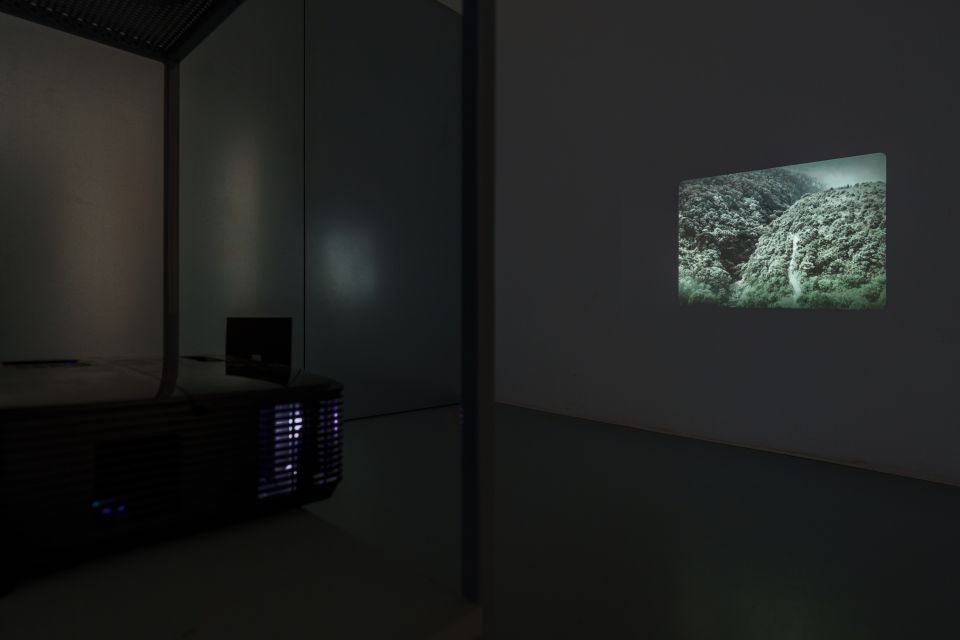
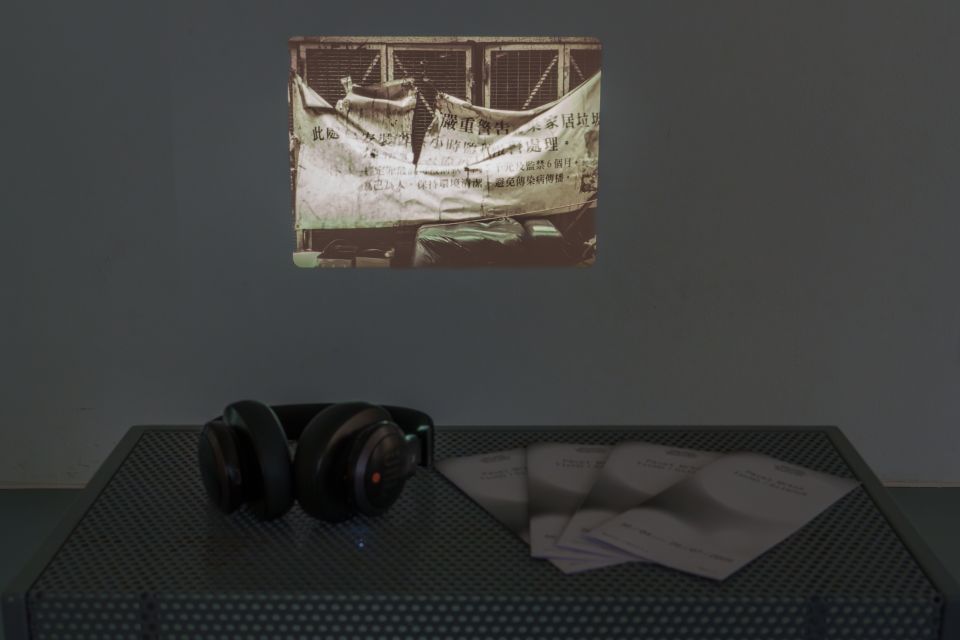
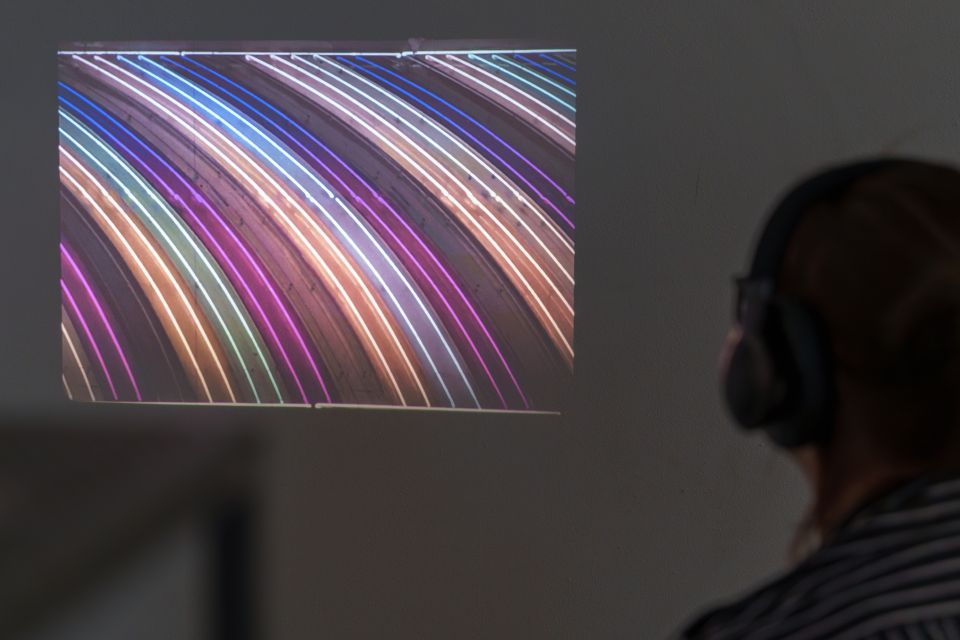
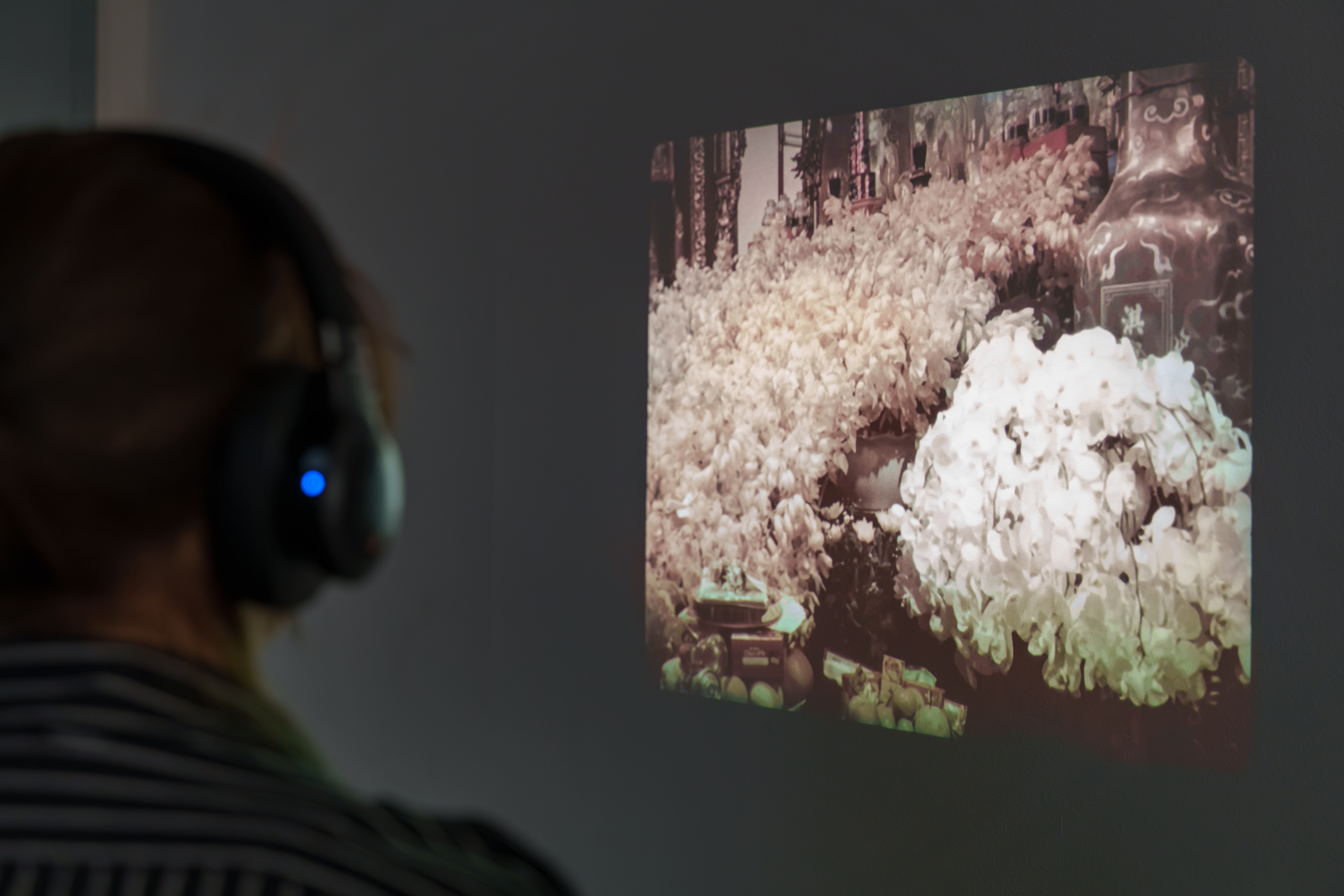
The pursuit of silence amidst sounds forms the central theme of a new artwork by audiovisual artist Pavel Mrkus. In his work SilencE (video projection, 2026), the artist explores the question of whether it is possible to discover and convey the gaps within noise. At a time when we are finding silence, it also conveys certain states of the human body – calm and tension – as we begin to perceive our own breath or heartbeat in the seemingly present yet fleeting silence.
An element of surprise enters the visual structure: the image appears on the wall suddenly, for a short moment, only to disappear again immediately. This glimpse acts like a fragment of memory – elusive, fleeting, leaving behind a trace of sensation rather than concrete content. The artwork thus engages with memory not merely as a record, but as a process of constant emergence and disappearance.
The soundscape of the audiovisual work draws on both field recordings and instrumental elements, complemented by a distinctive allegorical interlude. The video composition, with its vintage aesthetic, is characterized by a fixed structure divided into twelve-second segments, in which darkness alternates with selected short shots taken during the artist’s travels. The central motif of the work is the repetition of silence and sound, which disrupts the continuity of perception and fragments the ability to concentrate.
*Pavel Mrkus (1970)** is one of the artists who bridges the technology-shaped globalised world with the spiritual and mythical dimensions of human experience. His stay in Toyama, Japan, where he worked as a university professor for several years, had a profound influence on his approach and led to the development of a distinctive visual language. This language combines sophisticated digital technologies with an effort to convey spiritual impulses drawn from both Western European tradition and Eastern spirituality.
Curator
Adéla Machová
Graphic design
Ludmila Půr