Those who don't know Ukrainian steppe imagine it in sepia, scorched by a merciless sun, endlessly plain. Those who come from the steppe know otherwise. They have witnessed spring erupting there in shameless greens and purples, heard the roar of countless lives animating its heated body. They know, too, that the steppe is not entirely flat, but rippled with the kurgans, graves of nomad ancestors. Nestled across battlefields, croplands and megalomaniac colonial relics, steppe’s many bellies are full and taut, pregnant with the past and the future at once, urging to birth innumerable seeds drifting in its furrows, waiting to rise again and again after every fire, every war, every end of the world.
For the last centuries, the story of the Ukrainian steppe was told by those who’ve seen it as a place to conquer, exploit and cast as Europe's internal Other. On Early Modern maps, it was labeled as Wild Field or territory of Campi Deserti. The name originally reflected the uncontrolled nature of these lands for the empires and kingdoms of the time. The vast, open plain made long-term conquest and governance difficult, turning the Ukrainian steppe into a space outside the reach of the centralized powers and a cradle of various democratic, anarchic, and anti-imperial movements. It was here that Ukrainian Cossacks emerged and established the Cossack Sich — a refuge for rebels fleeing landlords to territories free from serfdom and administrative control.
Over time, the idea of the Wild Field shifted, taking on orientalist connotations. In Lord Byron’s poem Mazeppa (1819), the Polish king sends future Ukrainian Hetman, bound naked to a horse, into the Camporum Desertorum as punishment. The horse carries Mazeppa for days through steppes inhabited only by wild animals, embedding a new image of Ukrainian East as a wild deserted frontier.
The Soviet regime also exploited the “empty land” narrative to justify its colonial policies, portraying the steppe as deserted prior to its occupation. Yet both Russian colonial and European romantic visions are far from reality: Ukrainian steppe has witnessed the rise and fall of numerous civilizations and holds a centuries-old cultural heritage of people inhabiting it. At different times, these lands have served as transit routes and places of refuge, as sites of cultural exchanges, and as battlefields, including the current Russian war in Ukraine.
These historical forces have forged a unique identity among the people of Ukrainian steppe — shaped by the constant pressure of history, the omnipresent sense of danger coming from the open horizon, and the capacity to adapt, transform, and regenerate alongside the land.
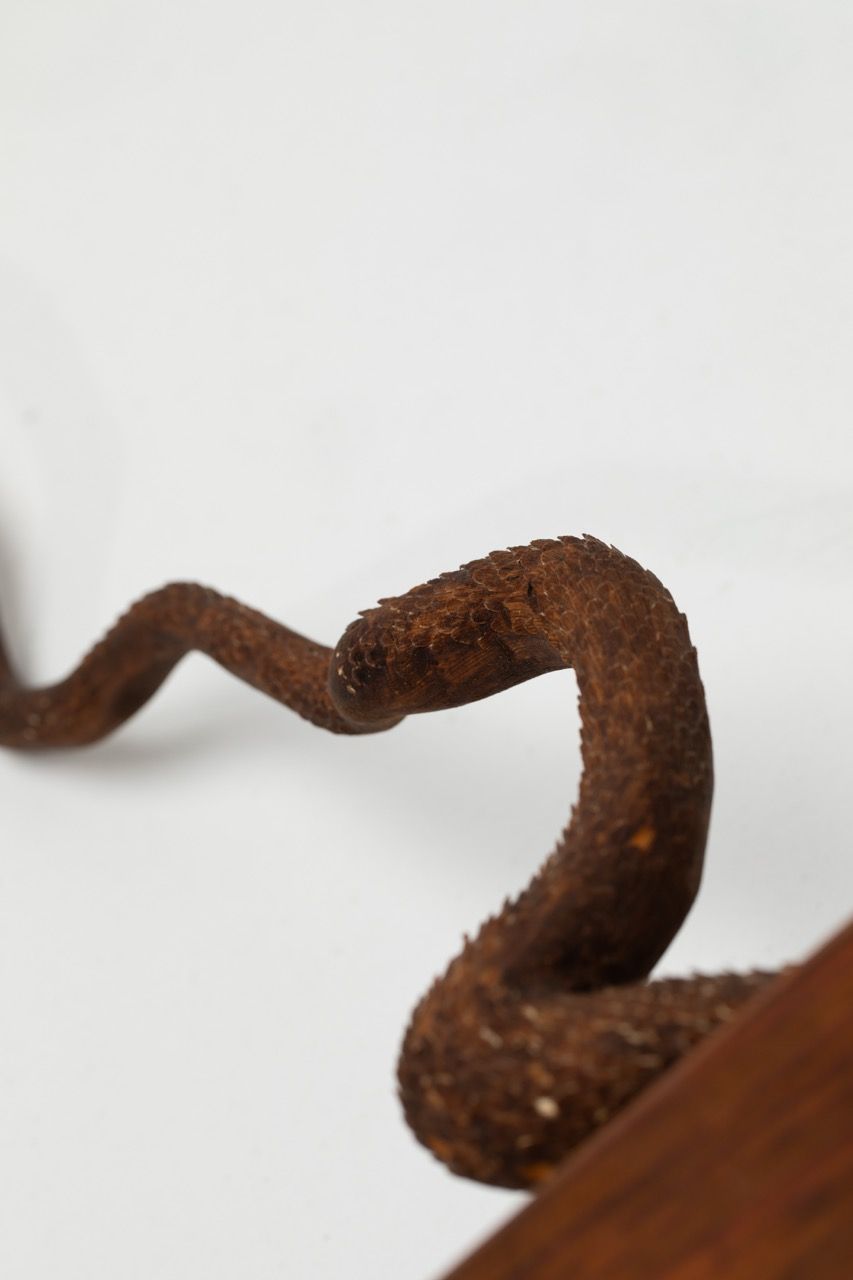
Anna Solianyk – Four stools for seating (2026)
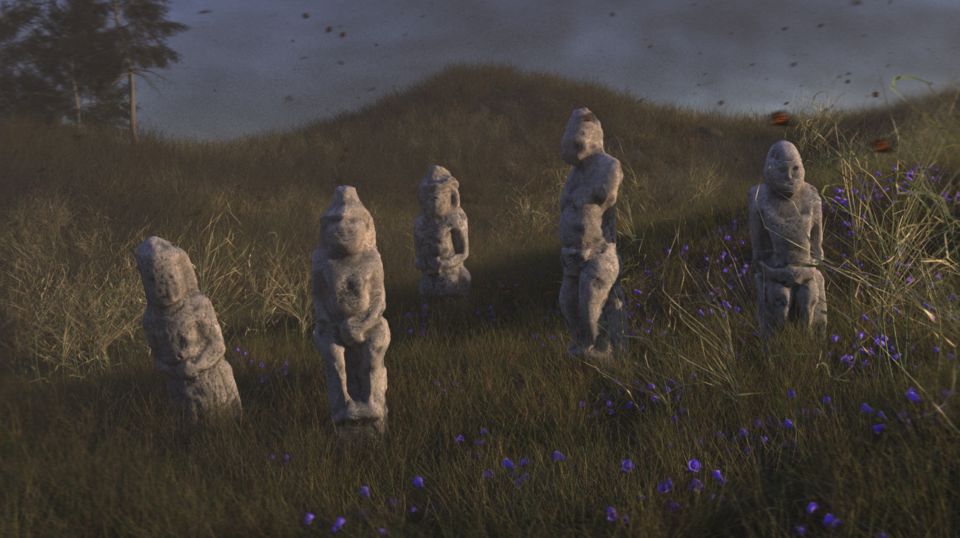
Polina Davydenko – After time (2024)
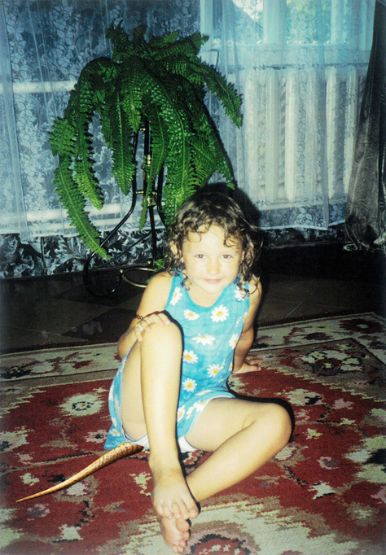
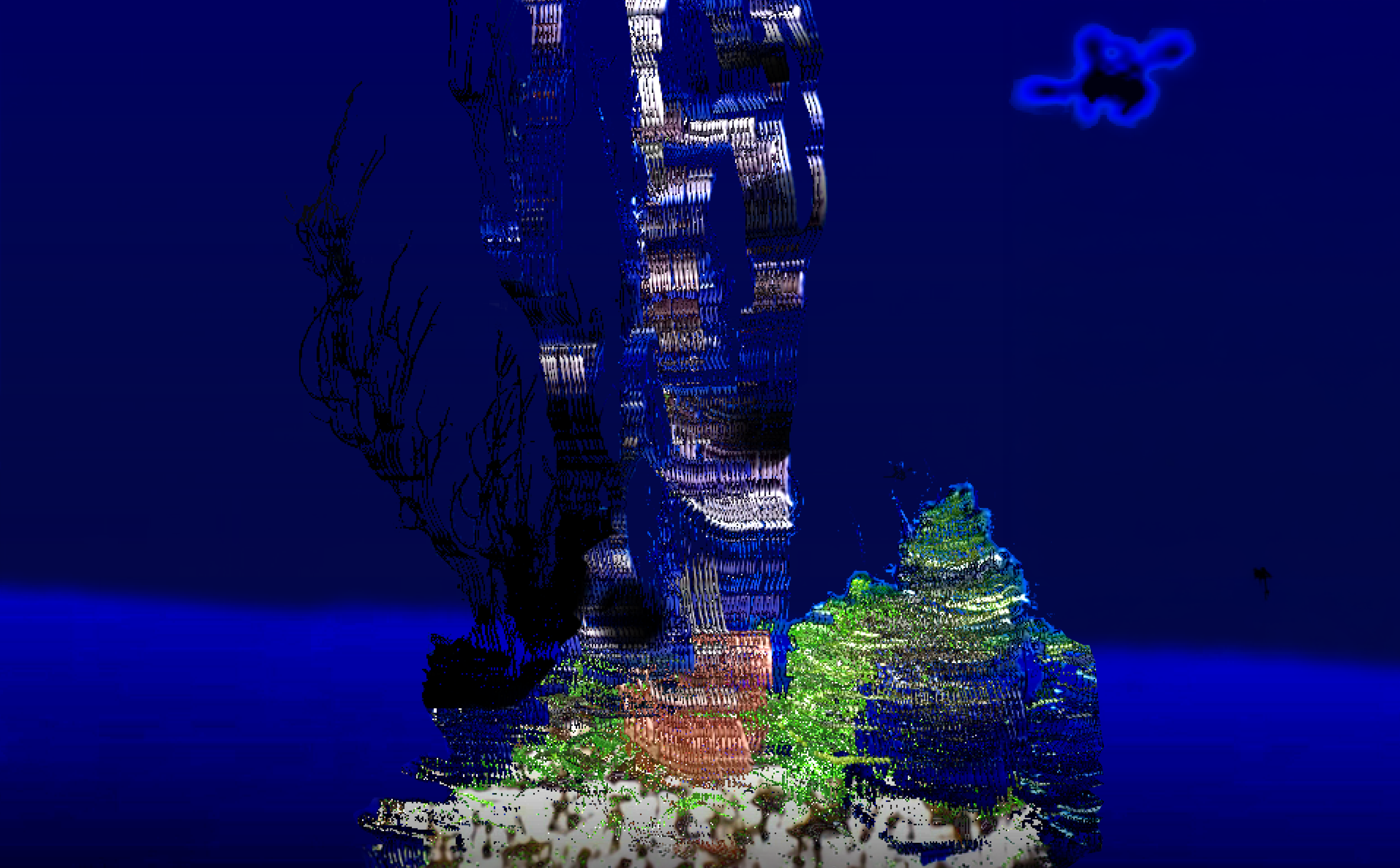
Viktoriia Tymonova – I witnessed her transforming rain (2023-2024)
The exhibition Camporum Desertorum tells the story of steppe through the voices of those who call it home. Among the contributors are artists from Eastern and Southern Ukraine now based in the Czech Republic, alongside the collective of 128th Heavy Mechanized Brigade “Wild Field” currently serving in the Ukrainian steppe. Formed in Dnipro in 2022 by volunteers who left civilian life to resist Russian imperial aggression, the brigade's presence in the exhibition stands for culture interrupted by Russia's war, and for lives redirected from creation to defense. In place of an exhibition poster, the exhibition brochure presents three poems by contemporary Ukrainian poets, translated into Czech for the first time, arriving as a letter from Ukrainian steppe.
Ultimately, Camporum Desertorum serves as a metaphor for the stereotypes constructed around various peripheral zones, most often by outsiders from positions of fear, superiority, or exoticization. The exhibition challenges these perspectives, giving voice to those long remained invisible within their own Camporum Desertorum.
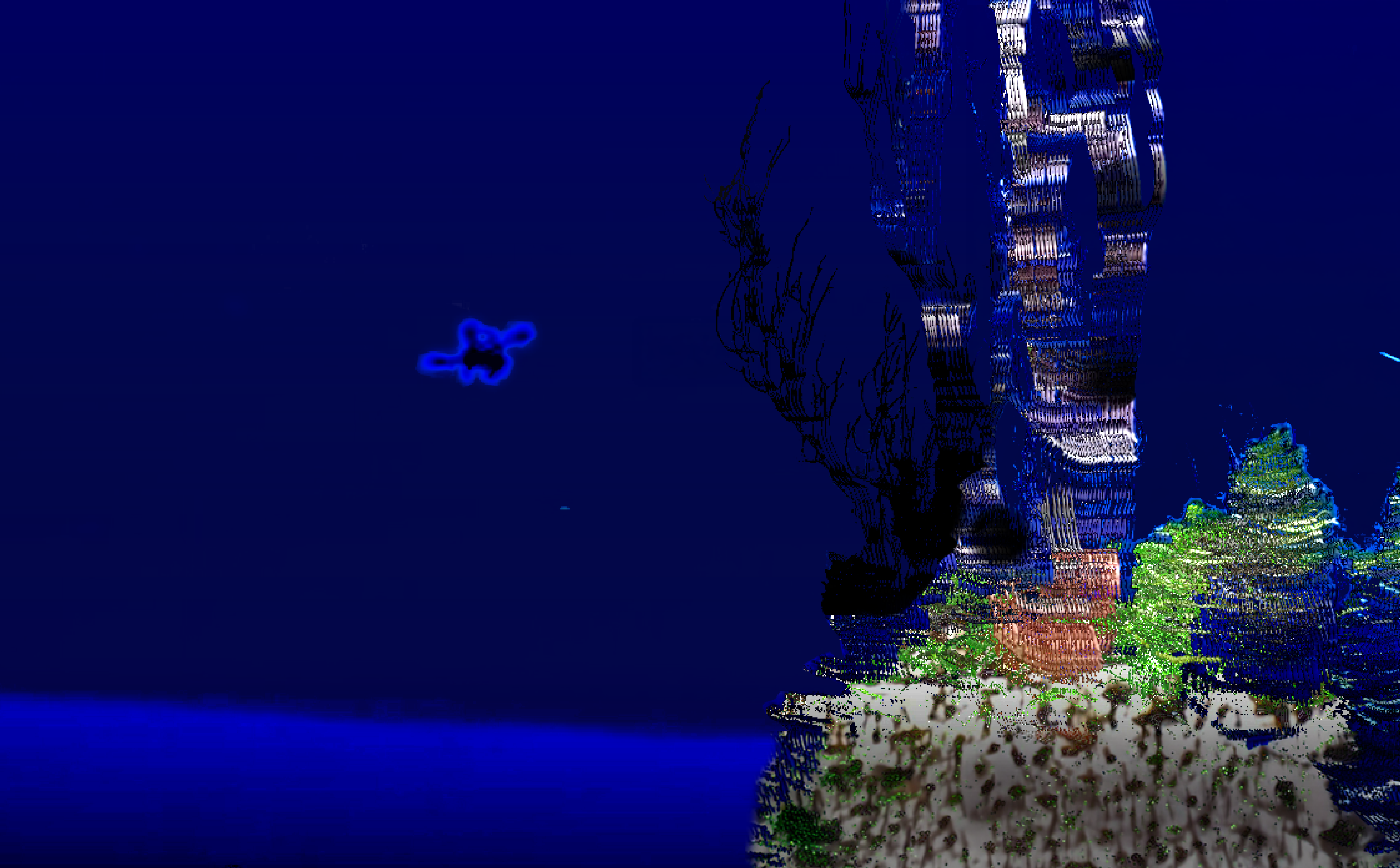
Exhibitors: Polina Davydenko, Anastasiia Lisnycha, Anna Solianyk, Viktoriia Tymonova,128th Heavy Mechanized Brigade "Wild Field”
Curator
Darja Lukjanenko
Graphic design
Masha Resheto
PR
Jan Čihák
Production
Zuzana Doleželová
Hana Žalmanová